What is a Time Synchronization System, and why is it important?
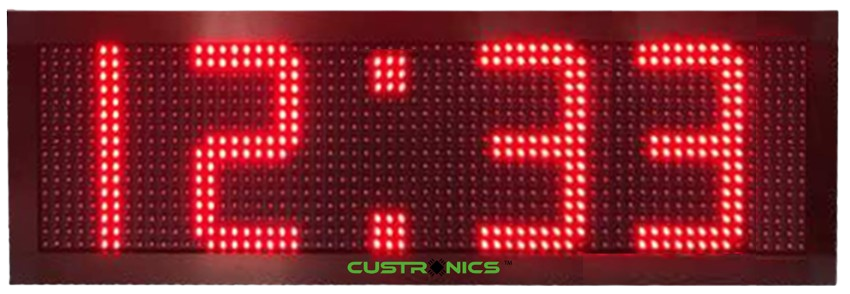
A Time Synchronization System ensures that connected clocks and time-dependent equipment display a consistent time reference. It is useful in environments where accurate timing is important, such as hospitals, factories, schools, offices and transportation facilities. A central time source helps reduce discrepancies between clocks and supports coordinated operations, scheduling and record-keeping.
What is the difference between GPS, NTP and Master Clock systems?
GPS-based systems obtain a time reference from satellite signals, typically through a suitable GPS receiver and antenna. NTP (Network Time Protocol) systems synchronize compatible devices over an IP network using an NTP time server. A Master Clock system distributes a common time reference to connected clocks or displays. The appropriate solution depends on your site’s network infrastructure, accuracy requirements and the types of devices to be synchronized.
Can Custronics synchronize clocks across multiple buildings or departments in Malaysia?
Yes. A suitable time synchronization system can be designed to serve multiple departments, floors or buildings. Depending on the system architecture, time may be distributed through a network or other supported connections to compatible digital clocks, LED clocks and other devices. For larger sites such as hospitals, campuses, factories and government complexes, the network layout and required coverage should be assessed before installation.
Can a Time Synchronization System work with our existing network and clocks?
Compatibility depends on the existing clocks, network equipment and synchronization method. NTP-compatible devices can typically synchronize through a supported IP network, while other clocks may require a compatible master clock, controller or signal interface. Before recommending a solution, we can review your existing equipment, connection requirements and preferred synchronization method to determine a suitable configuration.